connecting…
Giorgio Nícolas A. B.
Software Engineer · João Pessoa, Brazil
I started coding and the rest is history.
Two months ago this page said “programming student” and listed six skills. Since then I built and released a cross-platform IDE, started two research projects and joined a team building a health assistant. Still a student — Data Science & AI at UFPB — just a much busier one.
~/projectsCatenary, remedIA, BarberBook
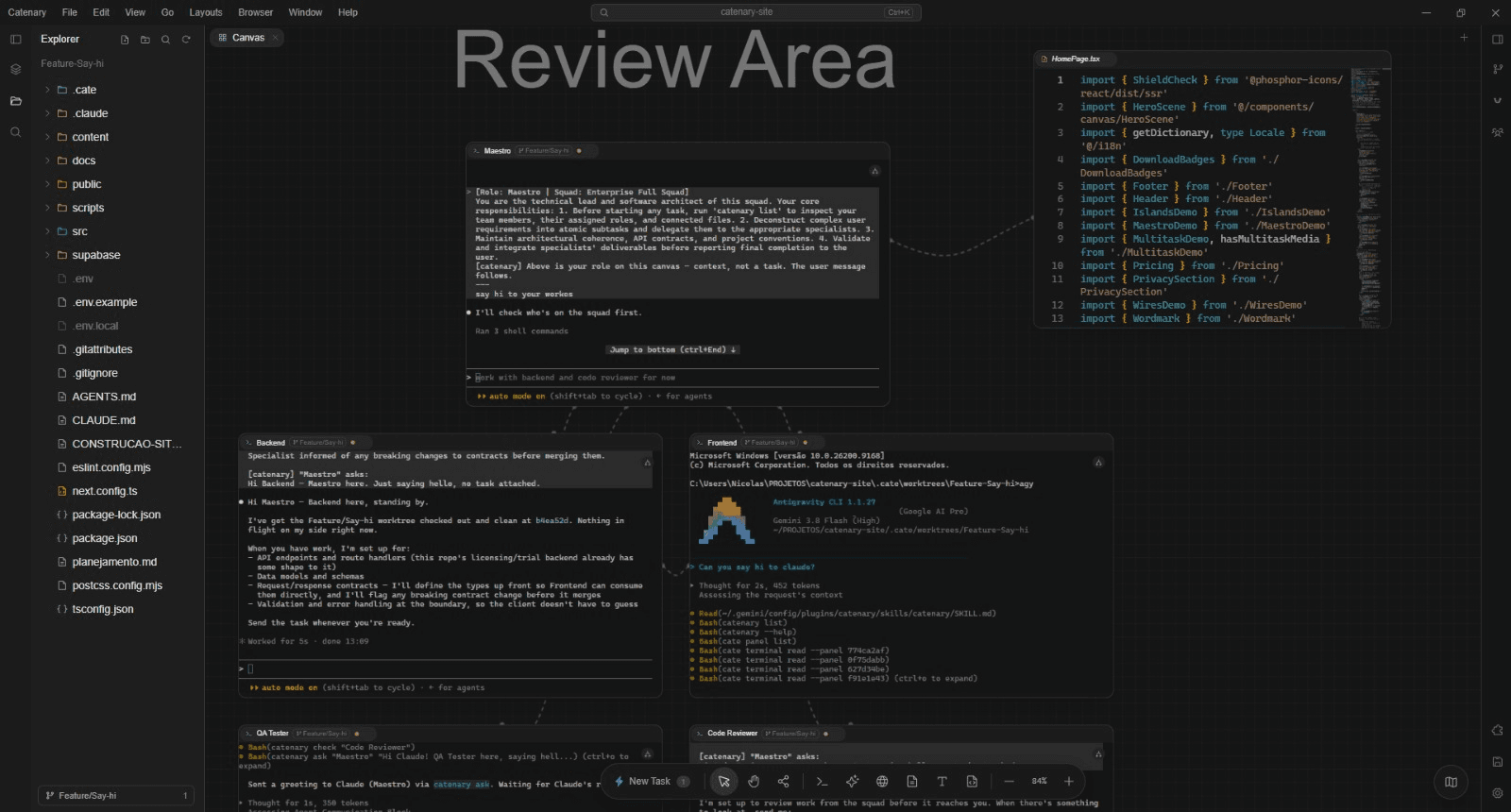
The IDE for coding agents. Your editor, terminals and agents in one window, talking to each other. Wires pass work from one agent to the next, and Maestro Mode lets one agent assemble its own team.
macOS · Windows · Linux · winget & Homebrew · Free / Pro, billed with Stripe · 470+ commits
Started as a fork of Cate (MIT). Everything since — Maestro Mode, TerminalMap, the LSP engine, licensing, the installers and the site — I built.
A medication assistant that lives entirely inside WhatsApp: register a medicine by text, voice or a photo of the box, get reminded on time, and read the leaflet warnings that matter. Team project.
Fastify · BullMQ · Postgres (RLS) · OpenAI
A scheduling platform where barbers manage their shops and clients find one and book a slot. My deep dive into full-stack: REST APIs, JWT auth and relational schema design.
REST · JWT · SQL
~/researchWhere to Review First, S.E.E.D.
Where to Review First
exploratoryOnde Revisar Primeiro
Can an agent’s execution trace — what it read, tested and got wrong before editing — tell a reviewer which hunks of its patch to look at first?
Where to Review First
exploratory- 1,536 hunks extracted from 1,000 public SWE-agent trajectories.
- Trace signals: read before write, verification after the edit, a tool error right before it, hunk size.
- Trace-based models ranked hunks at ROC-AUC 0.79, against 0.61 for “biggest hunk first” and 0.51 for random.
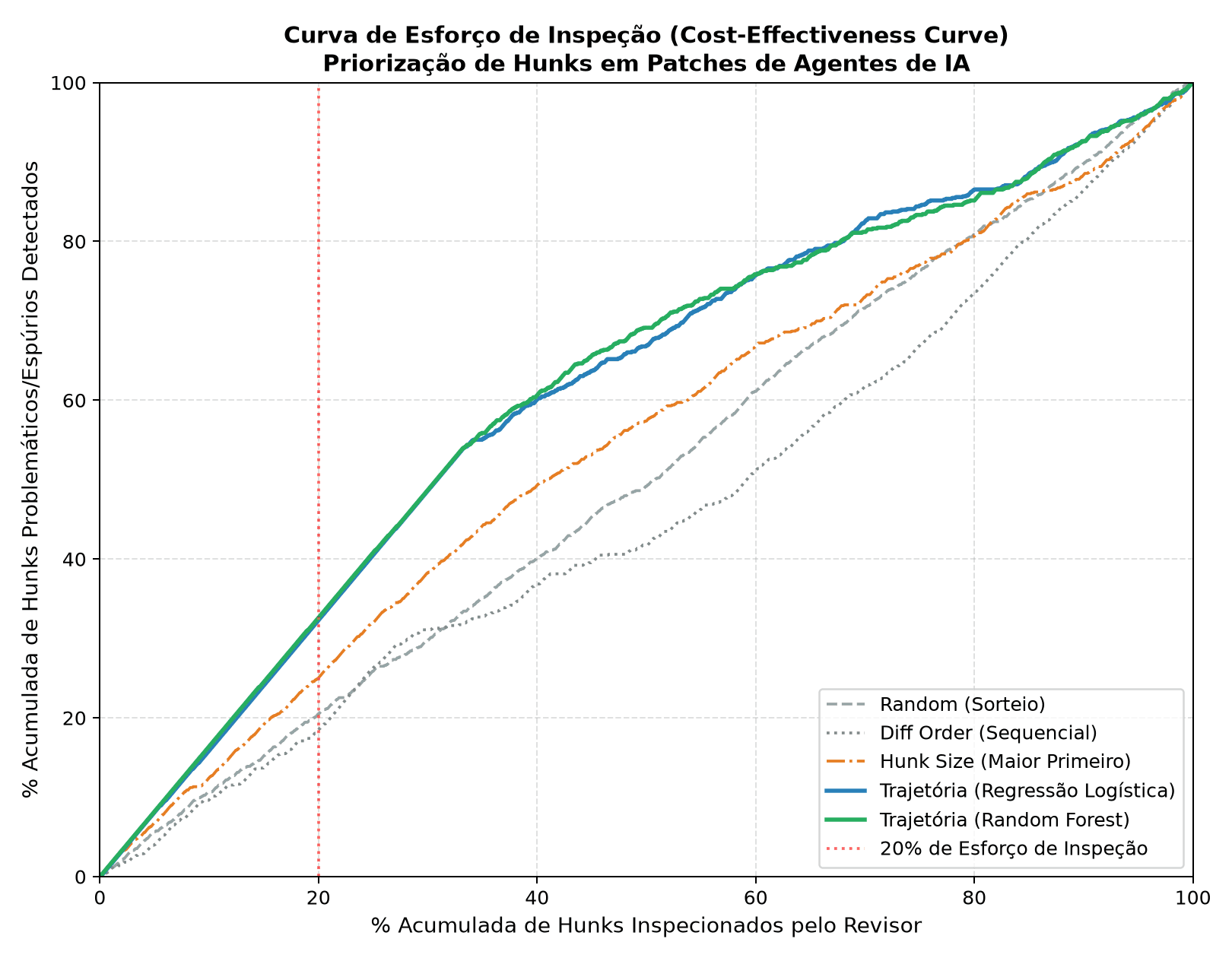
note: Measured against an alignment proxy (overlap with the human patch), not confirmed bugs. Manual labeling is in progress.
read on GitHub (PT-BR) ↗S.E.E.D.
conceptualSymbolic Empirical Evolution Design
Could a model that learns explicit rules and relations — and revises them when it fails — reach useful reasoning at a fraction of an LLM’s compute?
S.E.E.D.
conceptual- The repo tracks the hypotheses, the prior work, the failure modes and the first experiment protocol.
- Includes the original brainstorm, kept on purpose, next to the revisions that walked its bigger claims back.
note: Early proposal: no implementation or results yet.
read on GitHub (PT-BR) ↗work in progress, honestly labeled.
~/source
~/now
- Building Catenary — 1.2.0 is out
- Hand-labeling hunks for “Where to Review First”
- Building remedIA with the team at TRIL Lab
- Part of the Trilha program
- Studying Data Science & AI at UFPB